Gas or Wood Fire Pit? A Carolinas Buyer's Guide
Gas convenience or wood ambiance? Here's the Carolinas comparison for fire pits — install cost, fuel cost, HOA rules, family use.
Gas vs Wood Fire Pit: A Quick Decision That Defines Years of Use
We often see homeowners treat the gas vs wood fire pit decision as an afterthought.
It seems like a minor detail, but that single choice determines if the installation becomes a nightly gathering spot or an expensive yard ornament. A recent 2025 market report noted that 38% of U.S. homeowners plan to add an outdoor heater. We want to ensure your new carolina fire pit actually gets used.
Local codes and sizing play a huge role, so you should speak with vetted fire pit contractors early in the process. They understand the specific requirements for your neighborhood.
Let’s look at the data, compare the real-world performance of both options, and outline practical steps for making the best decision for your property.
Convenience vs Ambiance
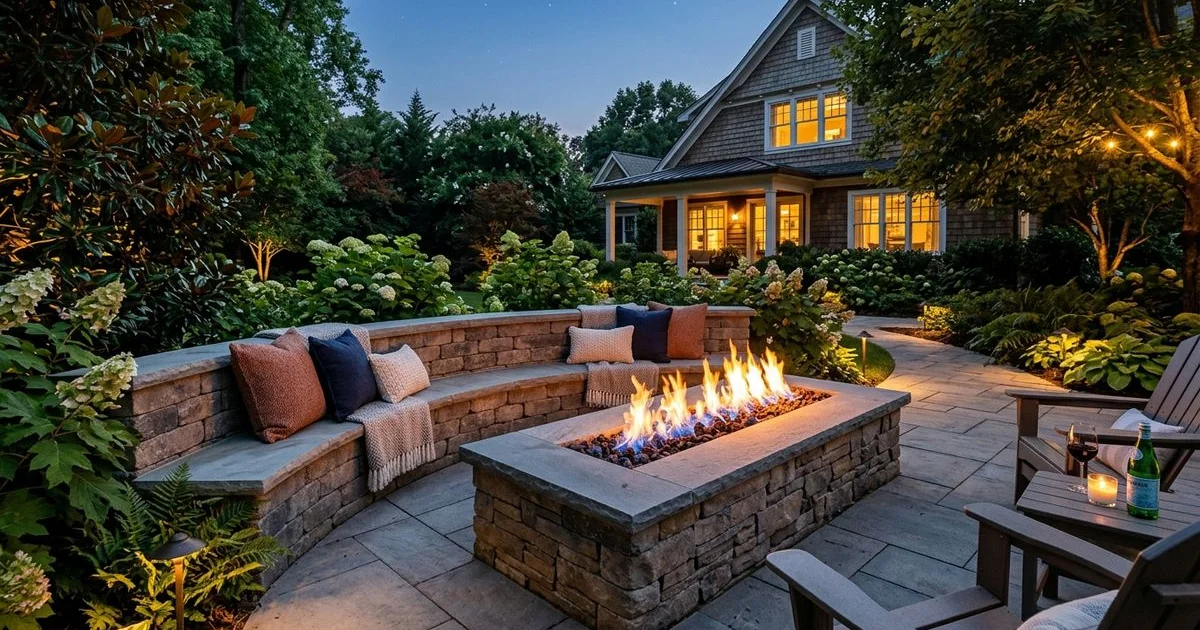
Gas units provide instant ignition and clean heating, making them the most convenient option for regular use. Wood-burning models take more time to light but deliver a traditional campfire experience with higher heat output.
We frequently remind clients that convenience directly impacts frequency of use. Natural gas and propane models ignite instantly with a switch or button.
They produce real flames for warmth without smoke, lingering smells, or a messy cleanup. A typical gas model generates a consistent 30,000 to 60,000 BTUs (British Thermal Units), which provides steady heat for a standard patio area.
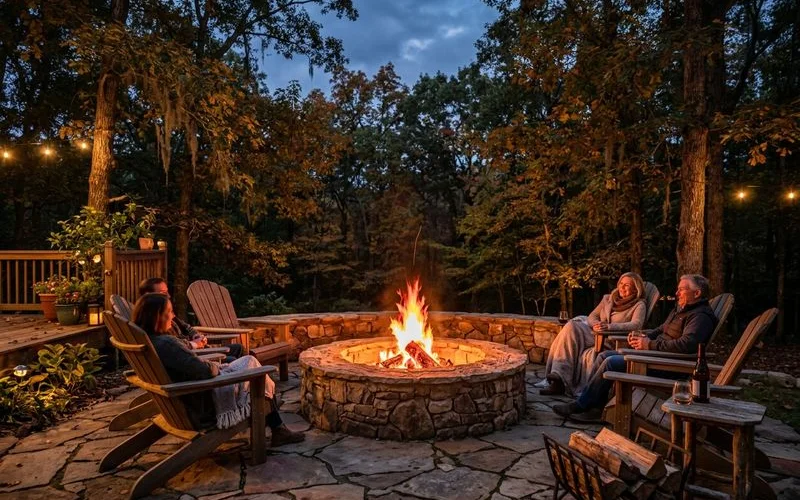
Wood-burning pits deliver the classic camping experience with real wood crackle and a distinct smoke scent. They require about 15 to 20 minutes to get going properly and demand active ash management. A fully loaded wood fire can exceed 100,000 BTUs, producing significantly more raw heat than standard gas options.
Insider Tip: If you live in an area prone to high winds, gas features generally perform much better and retain their flame consistency compared to open wood fires.
We recommend gas if you want a relaxing Tuesday evening fire after work. Dedicated weekend gatherings around the flames make the effort of wood worthwhile.
Family Safety
Gas features clearly win the safety category for families with young children. These models offer instant shut-off capabilities and adjustable flame heights without the risk of flying embers.
We prioritize safety discussions because recent statistics highlight the risks of open flames. A 2026 study published in the Journal of Burn Care & Research found that children under four years old face a burn injury rate 7.8 times higher than older age groups around these features. The majority of these incidents result from accidental falls into open wood fires or contact with hot surfaces left behind.
Most family-focused yard builds default to gas for this exact reason.
Key safety benefits of gas units include:
- Instant push-button shut-off
- No flying embers or sparks
- Cool-to-the-touch decorative glass or stones
- Hidden control panels to prevent tampering
We still install wood-burning options for families who commit to strict supervision. Parents universally report that gas versions get used more often, simply because the mental overhead of watching the kids is significantly lower. A helpful tip is to look for gas models with hidden control panels so toddlers cannot accidentally turn the gas on.
HOA Considerations
Homeowners associations across the U.S. and the Carolinas frequently restrict wood-burning features due to smoke nuisances and fire hazards. Most planned communities readily approve gas models.
We always advise checking local covenants before breaking ground. Many Charlotte and Raleigh communities require outdoor fire installations to sit at least 10 to 25 feet away from property lines or combustible structures. Rural and coastal areas typically offer more leniency and permit either fuel type.
Pro Warning: Do not place a wood-burning unit on a combustible composite deck. Safety codes require a non-combustible base, such as concrete, extending at least 24 inches in all directions.
Gas or electric options are much safer and easier to get approved for deck placement.
We see homeowners make the expensive mistake of building a masonry wood pit without verifying HOA permission first. They often face fines or receive orders to convert the structure post-build. Checking the rules early saves thousands of dollars in revision work.
Install Cost
Wood-burning installations generally cost less upfront since they do not require utility connections. Gas installations require professional plumbing lines, which increases the initial budget but adds long-term convenience.
We track construction costs closely to give clients accurate estimates. According to 2026 data from Angi, a standard gas fire pit installation averages around $850 but can easily reach $3,000 or more for custom in-ground builds. Professional gas line extensions typically add between $1,500 and $3,500 to the total project.
Running that gas line does provide future flexibility. The stub can easily connect to future yard expansions like gas grills, outdoor heaters, or a complete outdoor kitchen.
Wood-burning units skip the plumbing costs entirely. You can expect to pay between $1,500 and $5,000 for a high-quality masonry installation that includes integrated seat walls.
| Fuel Type | Base Installation Cost | Required Utility Add-ons |
|---|---|---|
| Wood-Burning Built-In | $1,500 - $5,000 | None |
| Gas Built-In | $850 - $3,000 | $1,500 - $3,500 (Gas Line) |
| Propane Tank Model | $200 - $800 | None (Uses refillable tanks) |
We highly recommend budgeting an extra $150 to $500 for local permits if you choose the natural gas route.
Fuel Cost Over Time
Operating a natural gas feature costs significantly less per hour than purchasing bundles of firewood. Wood only wins the cost comparison if you have free access to a private timber supply.
We want you to consider the ongoing expenses before finalizing a design. A true fire pit fuel comparison shows that natural gas is incredibly efficient compared to raw timber, meaning less fuel is wasted to create a comfortable temperature.
For a homeowner using their feature two or three nights a week, the seasonal costs vary greatly. Here is a breakdown of estimated fuel expenses for a typical season:
- Cord Wood (purchased): $200 to $400 per season, plus the space required for dry storage.
- Propane: $60 to $150 per season, requiring manual tank swaps.
- Natural Gas: $30 to $80 per season, drawn directly from the utility line.
We often point out that wood requires additional labor and preparation. You must source dry, seasoned wood with a moisture content around 20 percent to avoid excessive smoke. Green or wet wood produces toxic smoke and burns poorly, completely ruining the outdoor experience.
The Right Call for Most Carolinas Buyers
For the typical suburban home in Charlotte, Raleigh, or Charleston, gas remains the superior choice. The combination of family safety, HOA compliance, and low operating costs makes it the clear winner.
Real Estate Insight: A 2025 housing report noted that 87% of U.S. homeowners report that adding outdoor features directly increases their property value.
We see this preference reflected in national property trends. For rural lots, mountain properties near Asheville, and coastal cottages, wood-burning still delivers an authentic, crackling atmosphere that gas cannot replicate.
For complex projects integrating fire features with seat walls, paver patios, or comprehensive landscaping, hiring a single design-build contractor keeps everything aligned. This prevents scheduling conflicts between the masonry team and the gas plumber.
We find that the final decision rests entirely on your intended usage and local neighborhood rules. Suburban families tend to install gas and use it weekly. Rural owners often opt for wood and enjoy it monthly.
Either choice is fantastic as long as it fits your specific lifestyle and space. Start by verifying your neighborhood guidelines, and then contact a licensed local contractor to draft your initial site plan.
Gas vs Wood-Burning Fire Pits: Common Questions
Is a gas fire pit safer with kids?
Yes — instant on/off, no embers, no spark risk. Most family-focused Carolinas builds choose gas for this reason. The flame heights are also adjustable on most premium gas systems.
How much does adding a gas line for a fire pit cost?
Typical Carolinas gas-line extension to a backyard fire pit runs $1,500-$3,500 depending on distance and trenching. Cost drops if you're already running gas to an outdoor kitchen or fireplace.
Can I roast marshmallows over a gas fire pit?
Yes, with food-safe lava rock or fire glass — though wood-burning purists prefer the smoke flavor. Modern gas pits handle marshmallows, hot dogs, and most simple campfire cooking.
Ready to talk to fire pits contractors?
Get matched with vetted Carolinas fire pits specialists. Free, no-obligation quotes within 48 hours.
Free • No-obligation quotes • Vetted Carolinas contractors only