Resurface or Replace? A Carolinas Pool Deck Decision Guide
Cracked or settling pool deck in NC or SC? Here's when resurfacing wins and when full replacement is the right Carolinas call.
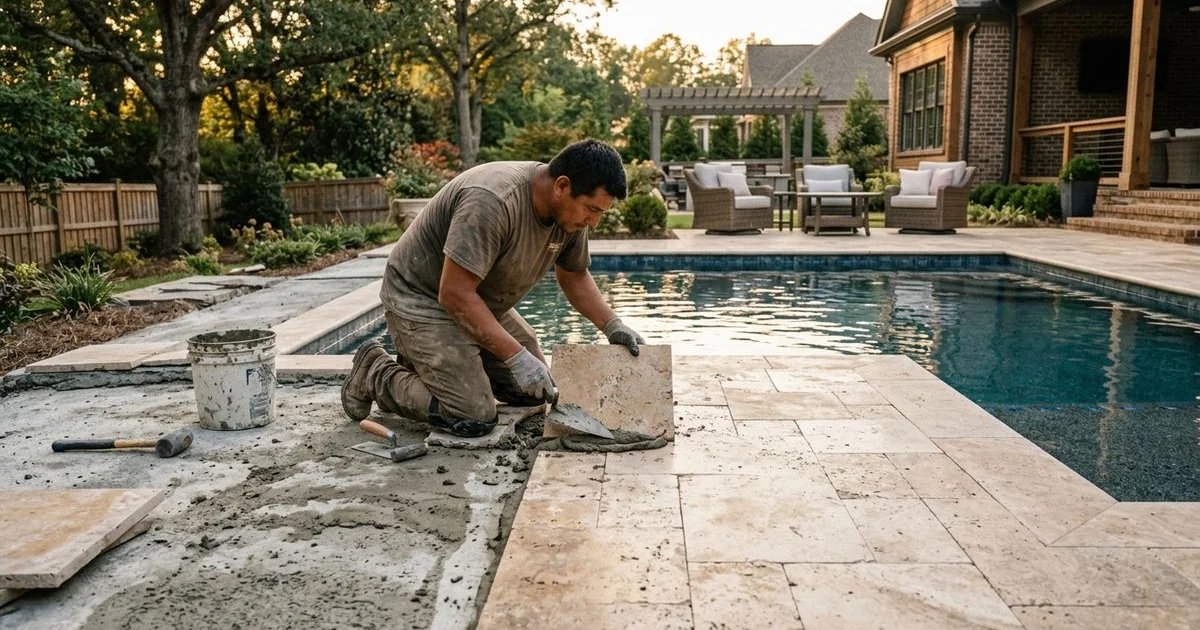
Pool Deck Resurfacing vs Replacement: The Right Call Saves You Thousands
We answer questions about pool deck resurfacing vs replacement every single week.
A client spots a few cracks and immediately assumes a total tear-out is necessary. The truth is that surface appearance rarely tells the whole story.
Our team knows that the underlying base condition actually dictates your next step. This structural reality typically swings project budgets by $15,000 to $30,000 across the Carolinas.
Match with vetted pool deck contractors in your metro for a proper evaluation. They will diagnose the base condition and recommend the correct path.
What Resurfacing Actually Means
Resurfacing applies a fresh top coat over an existing sound concrete slab. We use this method to restore aesthetics and improve safety without a heavy demolition process. A successful pool deck refinishing carolinas project requires proper material selection. Our installers frequently work with three common paths:
- Acrylic overlay or micro-topping: $4 to $10 per square foot. This provides a cosmetic refresh with a 7 to 12-year lifespan.
- Cool-deck overlay: $6 to $12 per square foot. These heat-reflective surfaces lower deck temperatures significantly during summer months.
- Paver overlay: $20 to $40 per square foot. This creates a premium look with a 25-plus year lifespan.
Safety dictates our material choices before applying any new surface. The Tile Council of North America recommends a Dynamic Coefficient of Friction rating of at least 0.50 for wet outdoor environments. Our preferred acrylic systems easily meet this ANSI A326.3 standard to prevent dangerous slips. You must reapply a clear sealant every two to three years to maintain this grip and protect the color.
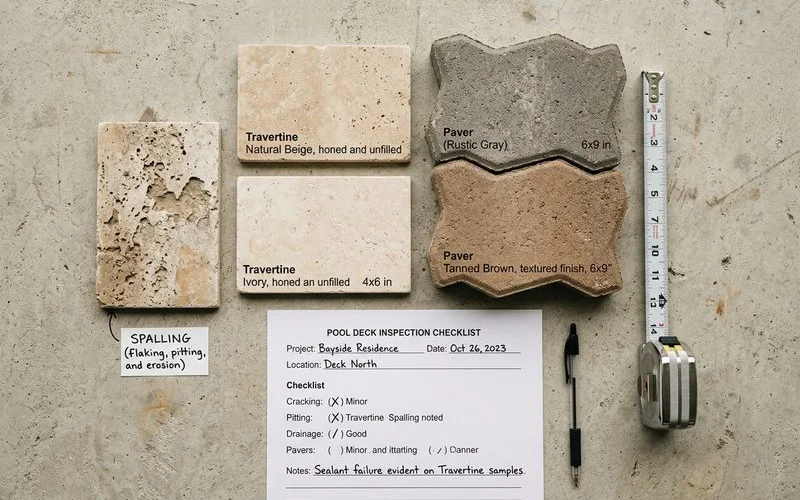
Damage Threshold: When to Resurface
Surface treatments work perfectly when the foundation remains stable. We look for specific indicators before approving a cosmetic fix. The general rule is that hairline cracks under 1/8 inch wide are excellent candidates for a simple overlay. Our structural assessments focus on confirming these four criteria:
- Surface is worn but the base is completely sound.
- Hairline cracking shows no vertical shifting.
- Slip rating has degraded below safe levels.
- You want a fresh aesthetic without a full rebuild.
Proper drainage prevents long-term damage. The deck needs a continuous 1/4-inch per foot slope away from the water to prevent pooling. Our concrete specialists will approve a resurface confidently if the slab meets this slope requirement and past repairs have held firm.
When Replacement Is the Honest Call
A total rebuild becomes mandatory when the soil beneath your concrete fails. We refuse to apply fresh coatings over moving slabs because the new layer will simply crack again within three to five years. This pool deck repair vs rebuild debate ends immediately if structural settling occurs. Our engineers look for these specific failure points:
- Base failure where cracks reopen and the deck settles unevenly.
- Deck pitches incorrectly toward the pool.
- Heaving from clay expansion or freeze-thaw cycles.
- Underlying drainage was never installed correctly.
Severe ground movement issues tie directly to regional soil types. The top three to four feet of soil acts as an active zone that shrinks during droughts and swells during heavy rains. Our local Carolina clay can exert upward pressures of up to 5,500 pounds per square foot when saturated. Piedmont clay heave, Lowcountry coastal settlement, and Asheville freeze-thaw cycles all destroy concrete bases over time.
Cost Comparison Reality
Evaluating the long-term financial impact requires looking past the initial quote. We break down these numbers daily for clients comparing their options. A proper stamped concrete replacement lasts 25 to 30 years with basic maintenance. Our pricing data shows a standard 600-square-foot project breaks down like this:
| Project Type | Cost Per Square Foot | Estimated Total (600 sq ft) | Expected Lifespan |
|---|---|---|---|
| Acrylic Resurfacing | $4 to $10 | $2,400 to $6,000 | 7 to 12 Years |
| Paver Overlay | $20 to $40 | $12,000 to $24,000 | 25+ Years |
| Full Replacement (Paver) | $35 to $70 | $21,000 to $42,000 | 30+ Years |
Choosing a fresh surface saves $15,000 to $30,000 upfront if the base permits it. A failed base ruins those savings instantly. Our team reminds clients that paying for a cheap surface over bad soil means paying twice.
What to Ask the Contractor
Hiring the right team requires asking highly specific technical questions. We encourage property owners to treat the estimate process like a job interview. A reputable contractor will provide detailed specifications rather than vague promises. Our suggested checklist includes these four mandatory questions:
- What is the current base condition regarding structural cracks and settling?
- Is the deck pitching correctly at a 1/4-inch slope?
- What is your warranty coverage for materials and labor?
- What specific salt-rated or chlorine-rated sealant do you use?
Saltwater systems require specific protection. The contractor must also install proper isolation joints between the pool coping and the deck to prevent expansion damage. Our teams perform this complete diagnostic evaluation as a standard part of every quote.
You should consider combining tasks for projects pairing pool deck work with retaining walls or patio extensions. Single-contractor coordination saves significant time and reduces overall mobilization fees. The right vetted firm sequences the heavy equipment work correctly so your new surface avoids accidental damage.
The foundation dictates your final strategy. We recommend focusing purely on soil and concrete health before looking at color swatches. Getting this base-driven decision right keeps your money in your pocket.
A proper pool deck resurfacing vs replacement choice yields a beautiful space that actually lasts. Contact your local concrete specialist today to schedule a thorough structural assessment.
Pool Deck Resurfacing vs Replacement: Which Makes Sense?: Common Questions
How do I know if my pool deck base has failed?
If cracks reopen after repair, the deck pitches toward the pool, or surface settling is uneven, base failure is likely — replacement is the call. A Carolinas pool deck contractor can confirm with a moisture and pitch reading.
Can I resurface stamped concrete with pavers?
Yes, with proper edge restraint and slope. This is a common Carolinas refresh option that adds value and durability. Travertine and brick paver overlays work especially well over sound concrete bases.
How long does a resurfaced pool deck last?
Quality acrylic or micro-topping resurfacing lasts 7-12 years in Carolinas climate; paver overlays last 25+ years. Salt-rated sealants and proper joint detailing extend either path.
Ready to talk to pool decks contractors?
Get matched with vetted Carolinas pool decks specialists. Free, no-obligation quotes within 48 hours.
Free • No-obligation quotes • Vetted Carolinas contractors only