What's Actually Included in an Outdoor Kitchen Build
First-time outdoor kitchen buyer? Here's the full component breakdown — grill, prep, sink, gas, water, electrical — and what real Carolinas builds include.
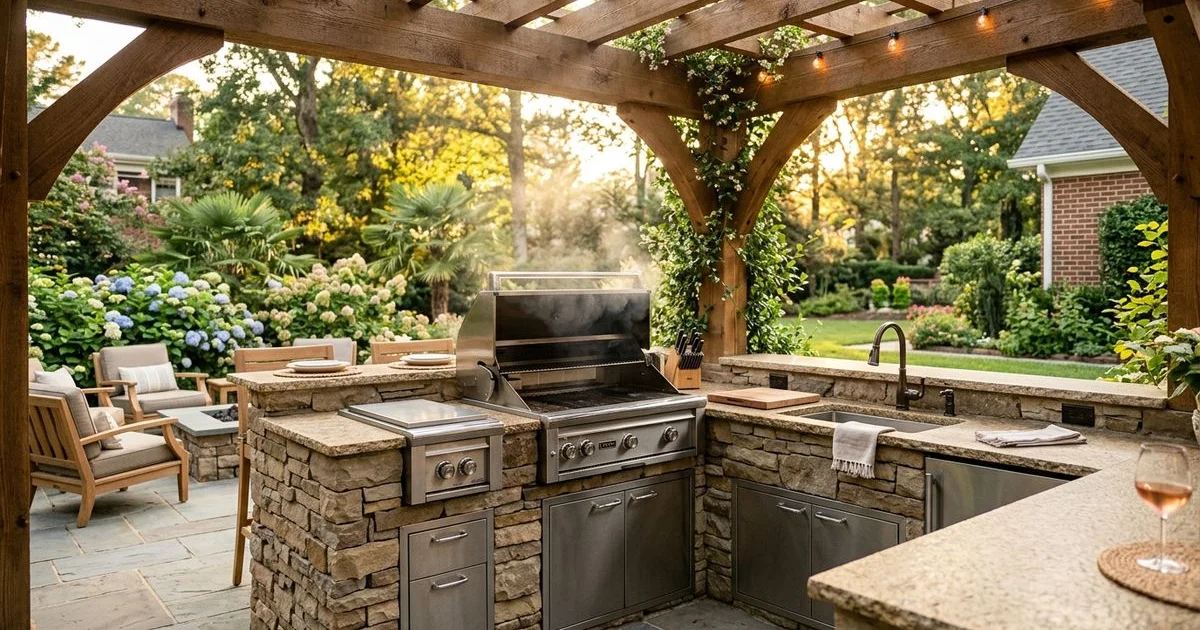
What’s Actually Included in a Real Outdoor Kitchen
We review dozens of project proposals every month, and the biggest point of confusion is always the exact scope of work.
Homeowners frequently ask us exactly what is included in an outdoor kitchen quote.
The baseline details vary wildly between builders in the US market. A low bid often hides missing utility lines or entry-level materials that will fail in the weather.
The right place to start is with the outdoor kitchen contractor matches. Vetted firms quote the full outdoor kitchen scope upfront. Let’s break down the data behind a complete build so you can compare your options with confidence.
Cooking Appliances
The grill acts as the centerpiece of your setup. Premium US builds specify established brands like Lynx, DCS, or Hestan for long-term reliability.
We see a massive shift in 2026 toward smart appliances featuring Wi-Fi connectivity and app-based temperature monitoring. This technology allows you to check internal meat temperatures from your phone without lifting the lid.
A standard high-end grill should offer a total output between 60,000 and 90,000 BTUs. Including an infrared rear burner provides genuine performance differences for high-heat searing and rotisserie cooking.
Consider these core outdoor kitchen components for your layout:
- Primary Grill: Gas, charcoal, or hybrid models.
- Side Burner: Essential for sauces or boiling water without running inside.
- Specialty Ovens: Built-in pizza ovens like Forno Bravo or Ooni.
- Smokers: Kamado-style or dedicated pellet smokers.
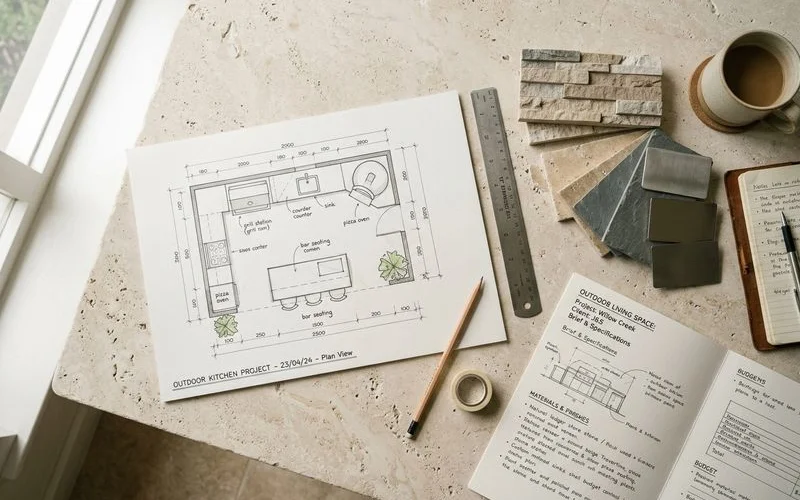
Prep & Sink
Counter space matters much more than buyers typically expect. A functional design requires a minimum of 24 inches of landing space on each side of the grill.
We recommend using dense, non-porous materials like Dekton or absolute black granite to resist staining from grease and weather.
The sink handles cleanup and food preparation. A basic cold water line with a drain is standard, but some premium builds add hot water for a true indoor-kitchen experience.
Storage drawers and under-counter cabinets keep your tools protected from the elements. Look for cabinetry made from High-Density Polyethylene (HDPE) or 304-grade stainless steel to prevent warping and rust.
Refrigeration
Standard indoor refrigerators fail quickly when placed in high humidity and fluctuating outdoor temperatures. Your chosen unit must hold an official UL rating for outdoor use.
This safety certification ensures the compressor can maintain internal temperatures even when the outside air reaches 100 degrees Fahrenheit.
We always verify the exact stainless steel grade on refrigeration quotes. Coastal areas require marine-grade 316 stainless steel to withstand salt air, while 304-grade works perfectly for inland regions.
Quality beverage centers in 2026 include a few specific upgrades:
- Injected Insulation: Keeps energy bills low during summer heat.
- Digital Thermostats: Maintains the exact 34 to 40 degree sweet spot.
- Sealed Components: Protects electrical wiring from rain and humidity.
Utilities
Utility lines represent the most expensive hidden variable in your project. A natural gas line installation in 2026 averages $15 to $25 per linear foot.
Digging trenches through existing landscaping or concrete will push that final price much higher.
Permitting is required in nearly every US county for this type of work. The roughing phase happens before the structural base goes in.
Your utility requirements will likely include:
- Gas Lines: Natural gas extensions or dedicated propane tank setups.
- Electrical Service: Required for refrigeration, smart grills, and GFCI outlets.
- Water Supply: Hot and cold lines with essential freeze protection.
- Drainage: Proper gray water routing for your sink and ice maker.
Structural Base
The foundation of your island dictates its lifespan and aesthetic appeal. Homeowners generally choose between pre-manufactured modular systems and custom masonry builds.
Modular cabinet systems install in a matter of days and read as a cohesive unit. Custom masonry takes a few weeks longer but creates a permanent structure that lasts for decades.
We created a side-by-side comparison of 2026 base costs to help you budget. Both options can be finished with stone veneer, stucco, or tile to match your existing hardscape patio.
| Feature | Modular Systems | Custom Masonry |
|---|---|---|
| Average Base Cost | $5,000 to $15,000 | $20,000 to $50,000+ |
| Installation Time | 1 to 3 Days | 2 to 4 Weeks |
| Lifespan | 10 to 15 Years | 30+ Years |
| Customization | Limited to kit sizes | Unlimited shapes and sizes |
What’s NOT in Most Quotes (Watch For It)
Contractors frequently leave critical site-prep costs out of their initial estimates. These omissions lead to frustrating change orders later in the process.
We advise clients to review their line items carefully for these common exclusions. Watch out for these missing elements before signing a contract:
- Permits and local inspection fees, which typically cost $100 to $300.
- Gas line extensions if no service exists at the patio.
- Electrical service upgrades if your main breaker panel is full.
- Annual counter sealant maintenance plans.
Premium projects often integrate your cooking area with a covered patio or a custom pergola. Single-contractor delivery for these large design-build jobs saves you a massive amount of coordination time.
A 12-foot L-shape outdoor kitchen built to last 30 years in harsh weather typically lands between $45,000 and $80,000. This price includes a full appliance suite, proper gas routing, water lines, and a custom stone veneer.
Modular alternatives bring that price point down by roughly half. If you are still weighing scope, our outdoor kitchens vs grilling stations comparison breaks down where each option fits.
A luxury build featuring a built-in pizza oven, a kegerator, and an integrated overhead structure can easily reach $150,000. The detailed outdoor kitchen scope outlined above is what you should be quoting against.
We recommend using these facts as your primary comparison framework when matching with vetted local contractors. Start your design process today by comparing detailed proposals from certified professionals in your area.
What Goes Into an Outdoor Kitchen Build: Common Questions
Do I need a permit for an outdoor kitchen in NC?
Yes — gas-line and electrical work require permits in every Carolina county we cover. Reputable contractors handle this end-to-end, including the inspection scheduling.
What's the difference between modular and masonry-built kitchens?
Modular cabinets install in days and are replaceable; masonry is permanent, more expensive, and typically lasts 30+ years in Carolinas weather. Modular wins on flexibility; masonry wins on long-term aesthetics and resale value.
Does an outdoor kitchen need running water?
Sinks need cold water + drain. Most Carolinas builds tap an existing exterior hose bib; freeze-protected supply lines are standard. Drain typically ties into a dry-well or existing yard drainage.
Ready to talk to outdoor kitchens contractors?
Get matched with vetted Carolinas outdoor kitchens specialists. Free, no-obligation quotes within 48 hours.
Free • No-obligation quotes • Vetted Carolinas contractors only