Wood vs Gas Outdoor Fireplaces in the Carolinas
Wood ambiance or gas convenience? Here's the Carolinas comparison — install cost, HOA rules, fuel cost, and maintenance reality.
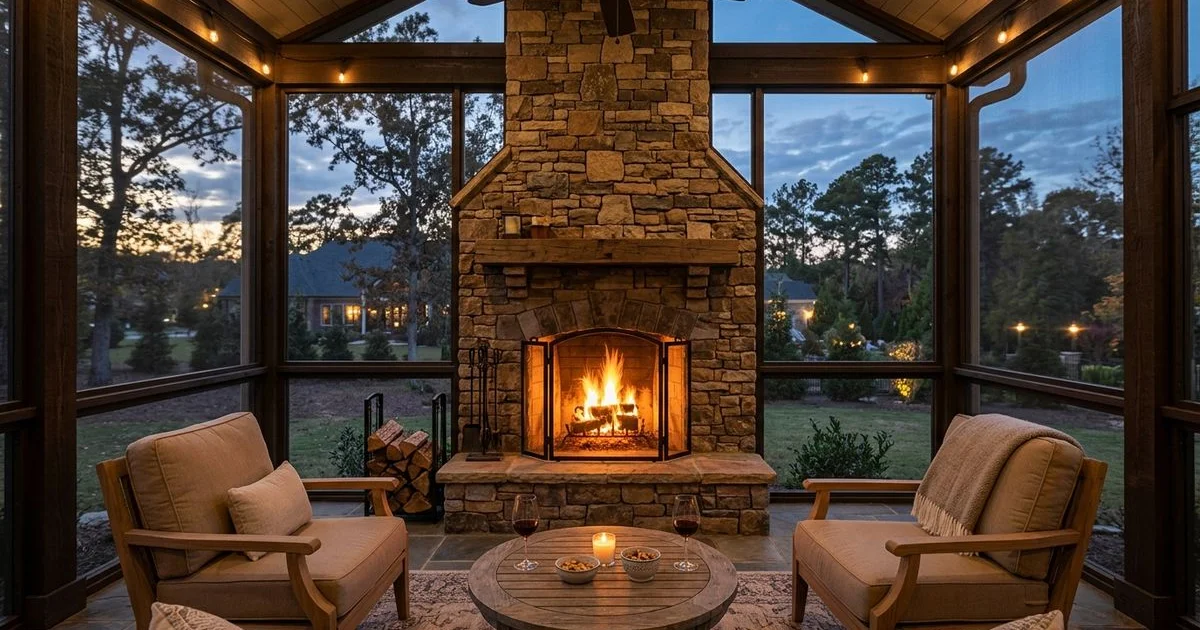
The Wood vs Gas Outdoor Fireplace Decision Many Carolinas Buyers Get Wrong
Our team sees buyers make the wrong choice by ignoring local neighborhood rules.
The wood vs gas outdoor fireplace debate is rarely about ambiance versus convenience. Homeowner association covenants in the Carolinas frequently dictate exactly what you can build.
We highly recommend speaking with vetted outdoor fireplace contractors before finalizing a design. These professionals understand which Raleigh and Charlotte suburbs prohibit wood-burning structures. Coastal and rural areas typically permit open flames with fewer restrictions.
Our goal today is to outline the hard numbers, assess local regulations, and explore practical ways to future-proof your investment.
Carolinas HOA Reality
Researching a wood burning fireplace carolinas project reveals strict local guidelines. Many HOA boards limit outdoor patio sizes to 300 square feet to manage neighborhood stormwater runoff.
Our project managers frequently see applications denied simply because a masonry chimney pushes the footprint past these limits. Mecklenburg County regulations mandate that permanent wood fires sit at least 25 feet away from any combustible structure. This distance requirement makes traditional chimneys impossible for small subdivision lots.
We track which local markets enforce the strictest rules.
- Prohibited areas: Most Charlotte planned communities (Ballantyne, SouthPark) and Raleigh research-park-adjacent neighborhoods ban permanent wood structures.
- Permitted areas: Older in-town Charlotte neighborhoods (Myers Park), rural Carolinas, and most Charleston single-family homes allow wood burning.
- Seasonal bans: The North Carolina Forest Service regularly halts all open wood fires during the dry spring season.
The smartest question you can ask a contractor is whether the local HOA will approve your specific design. A professional builder will know the exact setback requirements for your street.
Our teams refuse to pour a concrete footer until we secure written approval from the community board. You need to find a different contractor if your current builder ignores this step. Gas units easily bypass these strict smoke and setback regulations.
Install Cost Difference
Our estimating software shows a distinct price gap between mid-tier prefab masonry and gas models. A basic wood-burning masonry chimney installation ranges from $8,000 to $25,000. This price covers the hearth, a code-compliant stack, and essential clearance heights.
We quote gas models with log sets between $10,000 and $28,000 for the same visible masonry work. The critical variable is the underground plumbing trench. Current 2026 rates for running a new gas line average $15 to $50 per linear foot.
| Installation Type | Average Cost Range | Key Requirements |
|---|---|---|
| Prefab Wood-Burning | $8,000 - $25,000 | Code-compliant masonry stack, large footprint |
| Gas (With Log Set) | $10,000 - $28,000 | Gas line trenching, simplified venting |
| Custom Full-Masonry | $30,000+ | Extensive labor, premium materials |
Our crews find that trenching under existing concrete patios drastically inflates that per-foot plumbing rate. A custom full-masonry project runs much higher for both fuel types. Wood fireplace conversion costs $3,000 to $6,000 later if you lack a pre-roughed pipe.
We always advise installing the rough plumbing on day one. Laying a pipe early costs a few hundred dollars. Tearing apart a finished stone hearth costs tens of thousands.
Fuel Cost Over Time
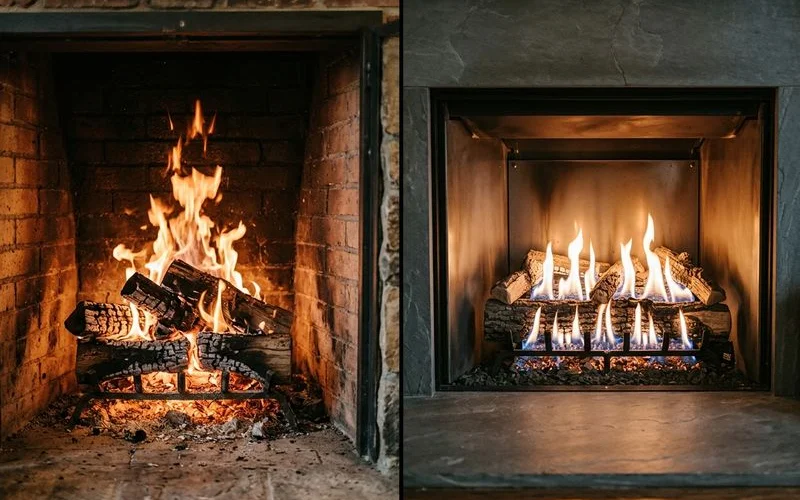
Our outdoor fireplace fuel comparison clearly shows that natural gas provides the best long-term value. Natural gas rates in the Carolinas remain highly competitive for residential use. Running a gas burner for three to four hours a night costs just $40 to $120 per season.
We see propane users paying slightly more, usually between $80 and $200 for similar seasonal usage. Cord wood prices have climbed significantly for premium cuts. Kiln-dried hardwood deliveries in Western North Carolina currently cost $250 to $750 per cord in 2026.
”Gas clearly wins on price if you plan to use the patio several nights a week. A steady supply of dry, seasoned oak vanishes quickly during the cold months, pushing seasonal fuel bills well over $500.”
Our teams notice that self-harvested timber works well for rural properties with ample acreage. That free supply runs out fast for daily users in suburban neighborhoods. Wood makes the most financial sense if you only light a fire four or five times a year.
Maintenance Reality
Our maintenance crews spend weeks repairing damage caused by neglected chimneys. Wood setups require dry storage space, messy ash cleanup, and careful smoke management on windy days. The Chimney Safety Institute of America recommends a Level 1 visual sweep every single year.
We remind homeowners that a standard sweep costs $150 to $400 across North Carolina. Ignoring thick creosote buildup creates serious fire hazards inside the masonry. A forced Level 2 camera inspection for extreme buildup easily pushes service bills past $600.
- Wood-burning upkeep: Annual sweeping ($150-$400), creosote removal, ash disposal, and pest control inside the stack.
- Gas system care: An annual safety check ($75-$150) and a basic burner cleaning every one to two years.
Our technicians agree that gas units require significantly less ongoing fuss. Gas easily wins the maintenance debate. Wood provides a rewarding ritual, but it demands serious physical effort.
The Ambiance Question
Our custom designers understand that some buyers will pay any premium for the real crackle and smell of burning timber. The authentic fire experience justifies the heavy maintenance in areas where HOAs permit it. Rural Carolina projects and premium Lowcountry homes often feature massive traditional hearths.
We spec high-end gas logs for clients stuck in restricted Charlotte and Raleigh suburbs. Modern sets from brands like RH Peterson deliver a hyper-realistic aesthetic. The Real Fyre Designer Series features hand-painted split bark and bright glowing ember beds.
Our favorite match-light burners offer several distinct advantages for suburban patios. They bypass strict local burn bans without sacrificing comfort. These systems provide full convenience while closely matching a traditional wood aesthetic.
- Massive warmth: The Real Fyre G45 model pushes up to 90,000 BTUs of radiant heat outdoors.
- Stunning realism: Hand-painted bark and glowing ember beds fool the eye perfectly.
The Smart Spec: Future-Proof It
Our most important piece of advice is to run a capped gas line during the initial build. Smart planning ensures you never have to tear apart beautiful stonework later. A homeowner might insist on burning timber today, but preferences often change in a few years.
We coordinate the plumbing trenching while laying the foundation for an outdoor kitchen or a covered patio. This proactive step takes very little extra time. The right design-build contractor handles this routine task at a minimal cost.
”A few hundred dollars spent on gas plumbing during the initial pour saves thousands in demolition costs five years down the road.”
Our clients appreciate the flexibility of a pre-roughed system. A future conversion to gas becomes a simple matter of swapping in a log set for a fraction of the cost. You secure long-term value by keeping both options open for your wood vs gas outdoor fireplace.
Reach out to our design team today to discuss your backyard vision and start planning the perfect outdoor living space.
Wood-Burning vs Gas Outdoor Fireplaces: Common Questions
Will my Carolinas HOA allow wood-burning?
Many Charlotte/Raleigh planned communities prohibit wood-burning fireplaces; coastal and rural areas usually permit them. Check covenants before designing — this is the most common decision driver.
Is gas more expensive over time?
Natural gas service is typically cheaper than buying cord wood in NC and SC. Propane can be more expensive depending on tank delivery rates and size. Wood is variable — DIY harvesting can be near-free.
Can I convert wood to gas later?
Yes — most masonry fireplaces accept gas-log inserts. Plan a gas line during initial build to avoid later excavation. Pre-roughed gas lines cost a few hundred dollars at build time, thousands to add later.
Ready to talk to outdoor fireplaces contractors?
Get matched with vetted Carolinas outdoor fireplaces specialists. Free, no-obligation quotes within 48 hours.
Free • No-obligation quotes • Vetted Carolinas contractors only